Cell Membrane!
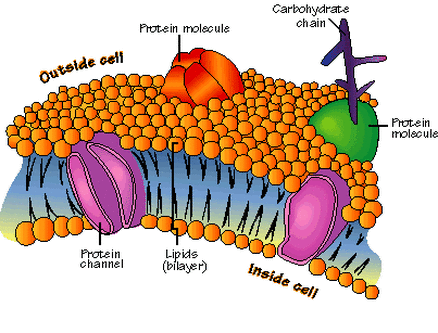
Each and every cell is surrounded by a cell membrane. These membranes are semipermeable, meaning that is allows some substances to pass through, while blocking others. The cell membrane is made up of a double layer of phospholipids that has a polar, hydrophilic head, and two hydrophobic haydrocarbon tails, it is also composed with embedded proteins. While most organelles have ther own indivdual membranes, the cell membrane is what surrounds the entire cell. Without which the cell is imcapible of getting its nutrients and getting rid of its waste.
http://library.thinkquest.org/C004535/media/cell_membrane.gifhttp://farm4.staticflickr.com/3014/3289062760_7909045704.jpg
http://library.thinkquest.org/C004535/media/cell_membrane.gifhttp://farm4.staticflickr.com/3014/3289062760_7909045704.jpg
Nuclear Membrane!
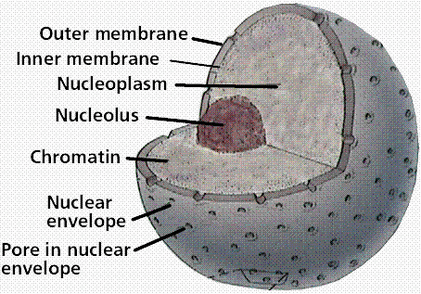
Many organelles have their very own membranes, like the nucleus. The nucleus is surrounded by a double membrane called the Nuclear Envelope also know as the Nuclear membrane. Inside of the Envelope are fine strands of Chromatin, which is DNA and protein combined. The neclear envelope has thousands of small holes on it called nuclear pores. These pores are used to allow materials to move into and out of the nucleus. When the nucleus copies its DNA and creats RNA the RNA has to move from the nucleus ot the cytosol. They do this by moving through the nuclear pores for without the pore the process of synthesized proteins would not occur. http://nursingcrib.com/wp-content/uploads/nucleus_1.gif?9d7bd4
